
HCLTech has launched 'HCLTech Pulse', a new business unit designed to help enterprises with annual revenues between USD 500 million and USD 5 billion accelerate their adoption of artificial intelligence and modernise their technology infrastructure, targeting a USD 400 billion global market opportunity.

Analysts predict that crude oil prices and the ongoing US-Iran conflict will be the primary drivers of stock market movements, with investors also closely watching the Jackson Hole symposium for cues on interest rates.

IBM Chairman and CEO Arvind Krishna details the company's substantial annual investment in India and its global USD 10 billion commitment to quantum computing over the next five years. He addresses the potential for AI to displace 10-20 per cent of jobs, particularly in the BPO sector, while also highlighting India's significant opportunity in the AI ecosystem. Krishna urges India to accelerate AI adoption, scale existing tech initiatives, and build its semiconductor manufacturing, advocating for a light-touch approach to AI regulation and emphasizing critical thinking in an AI-driven economy.

Sivakasi, India's fireworks capital, is eyeing global markets as green crackers, rising demand and interest from overseas buyers offer a chance to challenge China's dominance.

Indian benchmark indices Sensex and Nifty closed lower, primarily due to declines in Reliance Industries and IT sector stocks, coupled with rising crude oil prices and investor caution ahead of the US Federal Reserve's policy decision.

India is proposing the Data Empowerment and Protection Architecture (DEPA) for AI Training, a national framework designed to enable startups, researchers, and companies to train AI models using data from hospitals, banks, and public agencies while ensuring privacy and security. This initiative aims to unlock significant AI-driven value for India's GDP by 2030.

Indian benchmark indices Sensex and Nifty closed higher for the second consecutive day, primarily driven by robust buying in IT stocks following strong quarterly results and positive global trends. Tech Mahindra notably surged over 8% after reporting a significant jump in net profit.

Analysts predict that the Indian stock market's sentiment this week will be primarily influenced by the domestic GDP data announcement, crude oil prices, and the crucial US non-farm payrolls report.

Indian benchmark equity indices, the Sensex and Nifty, bounced back significantly, with the Sensex climbing 628 points and the Nifty snapping its seven-day losing streak, driven by easing global bond yields and fresh foreign fund inflows.

Indian benchmark stock indices, Sensex and Nifty, rebounded significantly after a four-day losing streak, driven by value buying and strong performance in metal, telecommunication, and healthcare sectors.

Buying silver on Dhanteras may carry cultural significance, but investors should not confuse the tradition with a financial strategy.

Crude oil prices are set for another volatile week with an upward bias, as ongoing US-Iran negotiations and heightened geopolitical risks, particularly concerning energy shipments through the Strait of Hormuz, continue to influence the market, according to analysts.

The Indian rupee depreciated by 43 paise to close at 94.81 against the US dollar, influenced by a negative trend in domestic equity markets, surging crude oil prices, and significant foreign institutional investor outflows.

Indian equity benchmarks Sensex and Nifty extended their losses for a third consecutive session, with the Sensex declining 460.30 points and the Nifty dropping 123.70 points, primarily due to surging crude oil prices driven by escalating tensions in West Asia and weak global cues.

Indian benchmark indices Sensex and Nifty experienced a significant slump in early trade, mirroring a bearish trend in global equities, as escalating conflict in West Asia drove up crude oil prices and intensified investor concerns.

Oracle NetSuite identifies India as one of its highest-priority markets, noting that small businesses, particularly outside major metros, are increasingly leveraging artificial intelligence (AI) and cloud technologies to expand domestically and internationally. This adoption is driven by India's young, tech-native population, which is less burdened by legacy systems, allowing smaller firms to compete more effectively with larger enterprises.

Apple's highly anticipated and most expensive foldable smartphone, the iPhone Duo, has completely sold out its first week's stock in India through pre-bookings, ahead of its official sale date of October 23. This strong demand, particularly at Apple Stores in Mumbai and New Delhi, signals a significant entry into the premium foldable market.

Analysts predict that geopolitical developments, particularly surrounding the Strait of Hormuz and the US-Iran standoff, along with crude oil prices, will be the primary factors influencing stock market movement in the coming week. Investors will also monitor foreign institutional flows and the Federal Open Market Committee (FOMC) minutes for signals on the Federal Reserve's policy outlook.

Indian government bond yields have recorded their worst losing streak in three decades, rising for the tenth consecutive week, driven by elevated crude oil prices and increasing global yields. The rupee also weakened, and India's foreign exchange reserves saw a significant decline.

A sharp price fall alone does not justify averaging down.

Indian benchmark indices Sensex and Nifty rebounded on Wednesday, driven by value buying in banking stocks and select heavyweight counters, with the Sensex climbing 332.63 points and the Nifty ending above 23,200.

India is caught in a no-man's land, not cheap enough for value investors to pile in but not growing fast enough to attract growth investors either, asserts Akash Prakash.
Indian equity benchmark indices extended losses for a second consecutive session, with the Sensex dropping 143 points, driven by a sell-off in power, banking, and financial stocks, coupled with elevated crude oil prices and persistent FII selling.

Foreign Portfolio Investors (FPIs) have withdrawn Rs 48,056 crore from Indian equities in October, driven by elevated crude oil prices, Middle East tensions, inflation concerns, and weak corporate earnings, though selling pressure moderated towards the end of the month.

India's drug price regulator, the National Pharmaceutical Pricing Authority (NPPA), has significantly reduced the maximum retail prices (MRPs) of 543 cancer drug brands and pack sizes, with some reductions reaching up to 93 per cent. However, expensive innovator drugs from multinational corporations, including high-selling Bevacizumab and immunotherapy Keytruda, remain unaffected, highlighting limitations in the price control intervention.

Indian benchmark equity indices, Sensex and Nifty, rebounded after a two-day losing streak, driven by strong buying in blue-chip IT stocks and positive global market cues, with the Sensex climbing 330.92 points.

Young investors with long horizons and small investment amounts stand to benefit most from choosing direct plans.

Indian benchmark indices, Sensex and Nifty, experienced declines in early trade due to elevated crude oil prices, escalating US-Iran hostilities, and renewed concerns over a potential US interest rate hike.

Investors should study the technology behind digital assets, including blockchain networks, wallets and transaction verification, rather than rely solely on recommendations. Understanding the technology could help them assess the risks.

Indian benchmark equity indices, Sensex and Nifty, rebounded in early trade after two days of losses, driven by strong buying in blue-chip IT stocks and a rally in global markets.

The Indian rupee has achieved its longest winning streak in nearly eight years, appreciating for eight consecutive sessions to close at a six-week high. This rally is attributed to strategic central bank interventions, healthy foreign capital inflows linked to the Jio Platforms IPO, and profit-taking in the US dollar.

Gold prices in India have fallen for the third consecutive day, shedding Rs 1,800 to Rs 1.5 lakh per 10 grams, primarily due to a strengthening rupee and weak global cues. Silver also saw a significant decline, tumbling Rs 5,000 to Rs 2.21 lakh per 10 grams.

'Every period of excessive optimism eventually gives way to a correction, while periods of extreme pessimism often create the best investment opportunities.'
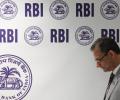
The Reserve Bank of India on Wednesday raised its policy repo rate by 25 basis points to 5.50 per cent, beginning a rate-hike cycle as rising inflation risks, elevated global yields and resilient domestic growth strengthened the case for tighter monetary policy. The decision by the Monetary Policy Committee marks a shift from its August policy, when it kept the repo rate unchanged at 5.25 per cent and retained a neutral stance while seeking greater clarity on the inflation outlook and growth-inflation balance.
Indian benchmark indices, Sensex and Nifty, closed marginally lower due to elevated crude oil prices, fresh US-Iran tensions, and expectations of a tighter monetary policy from the US Federal Reserve, despite strong domestic GDP growth.

HCLTech, India's third-largest IT services company, reported robust Q2 revenue growth of 2.3 per cent in constant currency, driven by services and ER&D segments, with strong new deal wins of $3.3 billion and significant traction in its AI business. Despite exceeding margin estimates and raising revenue guidance, some brokerages remain cautious due to the stock's premium valuation compared to peers.

WazirX founder Nischal Shetty stated, "We have outdone ourselves, but it is a journey we are still on, and there is a long way to go," reflecting on the cryptocurrency exchange's year-long journey since restarting operations after a cyberattack and restructuring.

Indian benchmark indices Sensex and Nifty opened higher, driven by a significant drop in crude oil prices and a positive trend in global equities, with foreign fund inflows further bolstering domestic markets.

Indian IT stocks have experienced their most significant weekly surge in 18 years, with the Nifty IT index climbing 11.72 per cent, as a global sell-off in AI-linked equities redirected investor attention towards India's IT services sector. This shift aligns with a JP Morgan report identifying India as a 'natural AI hedge' due to its large, liquid market and strong domestic institutional investor base.

'90% of the returns of people who actually make money over a period of time comes from what is called temperament.'
